Not just tactics.
Transmission architecture.
The delivery can be calibrated.
Mechanism Layer
what is structurally happening
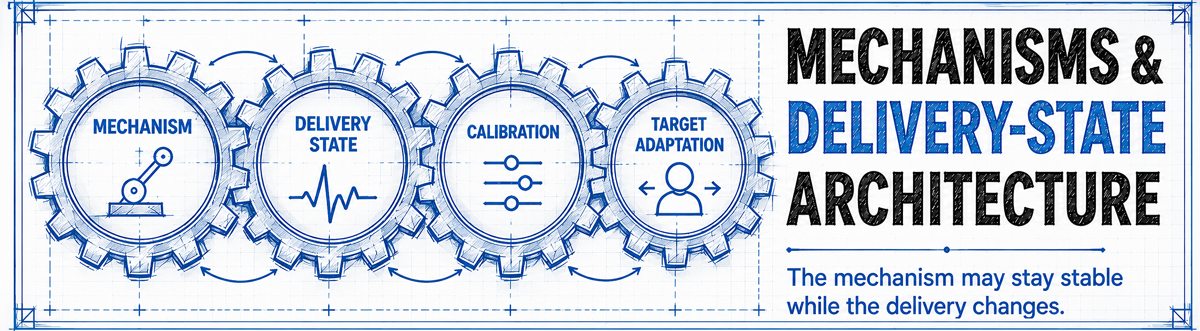
The mechanism is the underlying operation: projection, guilt-tripping, triangulation, intermittent reinforcement, ambiguity stabilization, or validation control.
Mechanic:
Identify the structural function before getting lost in the emotional presentation.
Example: “You’re the selfish one” may look like rage, but structurally it may be projection and blame flipping.
Delivery-State Layer
how it is emotionally transmitted
The delivery state is the emotional vehicle: rage, charm, silence, victimhood, tears, passive aggression, sarcasm, confusion, or calm superiority.
Mechanic:
Separate the emotional carrier from the mechanism being carried.
Example: Projection can be delivered through rage, tears, mock concern, or public embarrassment.
Calibration Layer
low · medium · high intensity
Delivery is not always fixed. It may be tuned subtly, moderately, or intensely depending on what the target responds to.
Mechanic:
The same delivery state can be adjusted in intensity.
Example: A guilt delivery may begin as a sigh, become disappointment, then escalate into a full victim performance.
Target Adaptation
different target · different delivery
Different people may receive different delivery states from the same operator because each target responds to different pressure points.
Mechanic:
Delivery adapts to the target’s resistance threshold, guilt responsiveness, silence tolerance, abandonment fear, or conflict avoidance.
Example: One person gets rage. Another gets helplessness. Another gets charm. The mechanism underneath may still be control or validation extraction.
Boundary Feedback
testing · learning · future delivery
Boundary testing often functions like calibration reconnaissance. The system learns what the target tolerates, challenges, ignores, rewards, or enforces.
Mechanic:
Early testing can shape future delivery possibilities.
Example: If silence reliably causes pursuit, silence may become a preferred delivery state.
Adjustment Timeline
feedback · escalation · recalibration
Delivery-states may evolve across repeated interactions. What begins subtly may become intensified, redirected, layered, or replaced entirely depending on target response and environmental feedback.
Mechanic:
The system may continuously adjust delivery through feedback, resistance, escalation, success, or prolonged exposure over time.
Example:
A subtle guilt cue may later evolve into disappointment, withdrawal, victimhood, blame shifting, or rage if the original delivery no longer produces the desired result.
The mechanism may stay stable. The delivery may change. The calibration improves through feedback.
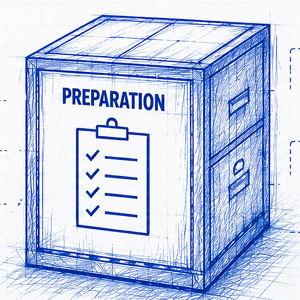 Delivery-State PreparationPre-transmission architectureThe conversation has not started yet. But the information may already be organized. Anticipation, allocation, sequence, friction reduction, and compartment stability may shape the presentation before it is delivered. See what happened upstream →
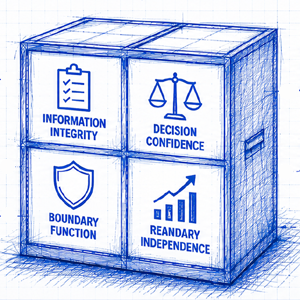 Indicators of Independent OperationAgency and self-directionThe delivery state can also change when anticipated reactions stop running the system. Information becomes more direct. Decisions require less permission. Boundaries stop arriving as emergencies. Look for independent operation →